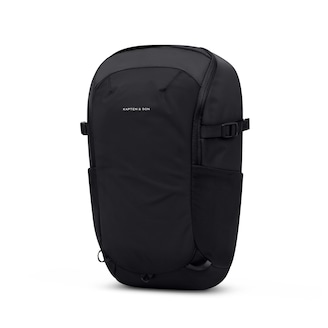
Åre Daypack Lite All Black
Our lightest backpack
£99.90
:format(jpeg))
Do you want to spend time in nature or simply move around more? Then why not go for a hike! We'll explain which gear is essential for beginner hikers.
Looking for more practical tips and inspiration? Add kapten-son.com as a preferred source on Google and find our guides even faster.
As a beginner hiker, you can tackle routes of between 10 and 15 kilometres per day. Here's what you should definitely get:
To make sure your first hike doesn't become a painful experience, it's best to invest in a high-quality pair of hiking boots. They should fit well and offer stability to prevent blisters and injuries. As a beginner, it's best to get professional advice in a shop and break your boots in at home before heading out into the big wide world.
:format(webp))
The most loyal companion alongside your new hiking boots: a lightweight backpack with around 13 litres of capacity is perfect for your first short day hikes. We recommend the Kapten & Son Åre Daypack Lite.
Weighing just 700 grams, it's one of our lightest rucksacks and, thanks to its robust materials and integrated rain cover, it's ideal for outdoor adventures. Away from the trail, you can also use it as an everyday work or sports bag.
Åre Daypack Lite All Black
£99.90
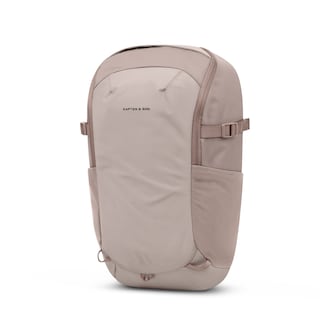
Åre Daypack Lite Muted Rose
£99.90
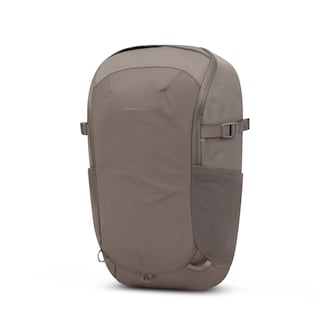
Åre Daypack Lite Taupe
£99.90
:format(webp))
The layering principle keeps you well prepared: several thin layers keep you warm, while still allowing you to adapt to different weather conditions and temperatures by adding or removing clothing.
Here's how it works:
The base layer sits close to the body and wicks away sweat, so it should be breathable. For the second layer (mid layer), you can opt for a fleece jacket to keep you warm. The outer layer (shell layer) should protect you from rain and wind, so a rain jacket is ideal here. With a good 3-in-1 jacket or double jacket, you combine two layers in one garment and are reliably protected.
Find out more about layering or the layering principle here.
Useful basics also include functional underwear and a head covering for sun protection. Even when the sky is overcast, UV radiation can be strong, so you should also have sun cream and sunglasses with you.
As with pretty much everything, the same applies to hiking: drink plenty. To be precise, 1–2 litres of water per day hike. A (reusable) water bottle is therefore essential. Because you burn calories while hiking, provisions are also important to keep your energy levels up. To avoid a food coma and not weigh down your pack unnecessarily, you can rely on light snacks such as energy bars, nuts, dried fruit, or sandwiches.
No matter how carefully you've broken in your hiking boots – blisters can still develop. And while you're hopping over rocks and roots, you can quickly pick up the odd minor injury. A first aid kit including blister plasters, antiseptic, and tweezers for splinters or ticks should therefore be a permanent part of your kit.
You've successfully started hiking and want to expand your existing equipment for longer tours? These items will turn you into a hiking pro:
:format(webp))
These have nothing to do with age – it's more about the terrain you're covering. They're particularly useful on uneven ground or during long descents. You can usually choose between lightweight carbon poles or more robust aluminium ones. There are also telescopic poles that you can adjust flexibly. Folding poles can be clipped together with press studs, but you should pay attention to the right size when buying.
Whether in a tent or a mountain hut: a sleeping bag is a must on multi-day hikes. You should pay attention to the thermal performance, which is indicated by the comfort temperature. Many people choose a sleeping bag rated between 0 and 5 degrees. But the filling matters too: down is lightweight and compresses well. Synthetic materials are easy to care for and keep you warm even when wet.
Because nobody likes sleeping on the ground, and just in case, it's worth having a sleeping mat with you. Classic models are very light and compact, but also less comfortable than self-inflating mats, which offer greater comfort but are slightly heavier than conventional sleeping mats.
Here you have a choice between a wide variety of models: single-person tents are lightweight, but – as you've probably already guessed – don't offer much space. Dome tents often come with an inner tent that you can also pitch on its own in sunny weather. Tunnel tents need to be guyed out, but they are lightweight and very spacious.
Hiking late into the night, the weather suddenly changes, or you want to carry on reading your book in the tent? To avoid draining your phone battery unnecessarily, a head torch or torch is a practical alternative. But remember to bring spare batteries so you don't end up in the dark after all.
Opening tins or repairing minor things – a multi-tool including a knife, scissors, and pliers can be indispensable in many situations. It's best to go for a model that is both lightweight and sturdy.
Even in the age of Google Maps, you should consider an analogue alternative. Partly for the battery reasons mentioned above, and partly because you most likely won't always have 5G during your hike. To avoid getting lost, a map and compass are essential. A GPS device with offline maps can be a useful addition.
Time for a short break? On uneven or cold surfaces, you'll be grateful for a seat pad. Alternatively, you can of course also use your sleeping mat.
A small but effective means of drawing attention to yourself in an emergency. Available for little money online or at outdoor retailers.
How much does hiking gear for beginners cost? You'll find the relevant items in every price category – and of course there's no upper limit. Good equipment is essential for enjoyable hiking, especially if you want to pursue your new hobby regularly and extensively. To start with, you should budget around 300 to 400 euros for boots, a rucksack, a jacket and so on. But once you've made that investment, you'll enjoy your new essentials – and above all your next hike – for a long time to come.
:format(webp))
Because you can never be entirely sure what awaits you on the trail and the weather in the mountains can change unexpectedly, you should have a plan for every eventuality. Double jackets like our Everyday 3in1 Jacket are ideal for this. It consists of a rain jacket and a fleece jacket that can be worn either together or separately.
A water column describes how much pressure it takes before water penetrates a material. Our rain jacket with a 10,000 mm water column is waterproof and reliably protects you from getting wet at all times. With this rain jacket, you're definitely on the safe side outdoors.
At the same time, the fleece jacket keeps you warm. It's soft, lightweight, easy to care for, and dries quickly – making it indispensable on your first hikes.
With the Everyday 3in1 Jacket, you have not only a waterproof but also a warming layer with you.
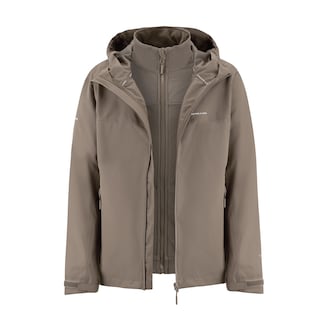
Everyday 3in1 Rain Jacket Taupe
£159.90£179.80
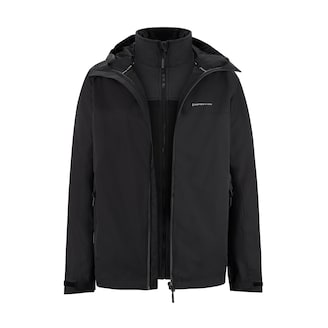
Everyday 3in1 Rain Jacket All Black
£159.90£179.80
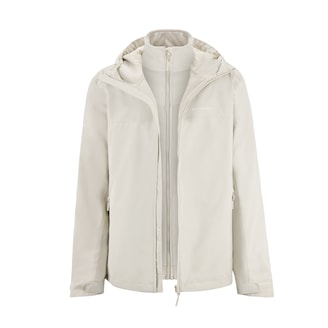
Everyday 3in1 Rain Jacket Sandstone
£159.90£179.80
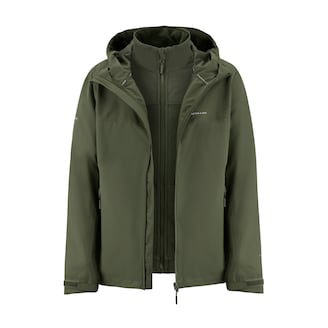
Everyday 3in1 Rain Jacket Olive
£159.90£179.80
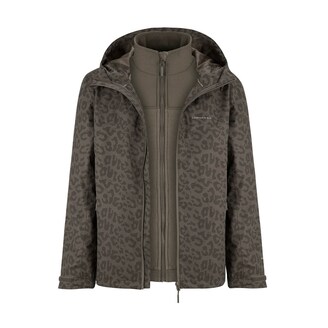
Everyday 3in1 Rain Jacket Leo Dark Brown
£169.90
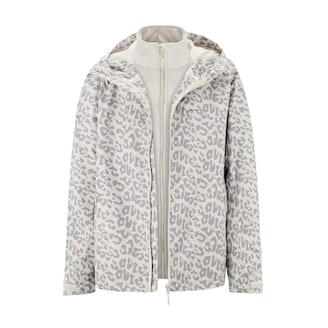
Everyday 3in1 Rain Jacket Leo Sandstone
£169.90
Hiking creates the perfect balance to an everyday life that barely gives us a moment's rest amid all the information, noise, and hustle. You can discover nature, keep fit, and breathe. The right gear makes it easier to start your new hobby and helps you stick with it in the long run. At first, the choice may seem overwhelming – but don't worry: you don't need everything at once. Make sure you prepare well for your route and check that your essentials are functional. Can't wait to conquer the first summits with your friends? Share this post with them so that soon you'll all be saying: time to hit the trails!